





Skip to content

Keep the people you can't lose

By the exit interview, the reason is months old. Decided checks in with every team each week, so you hear what's wearing them down while there's still time.

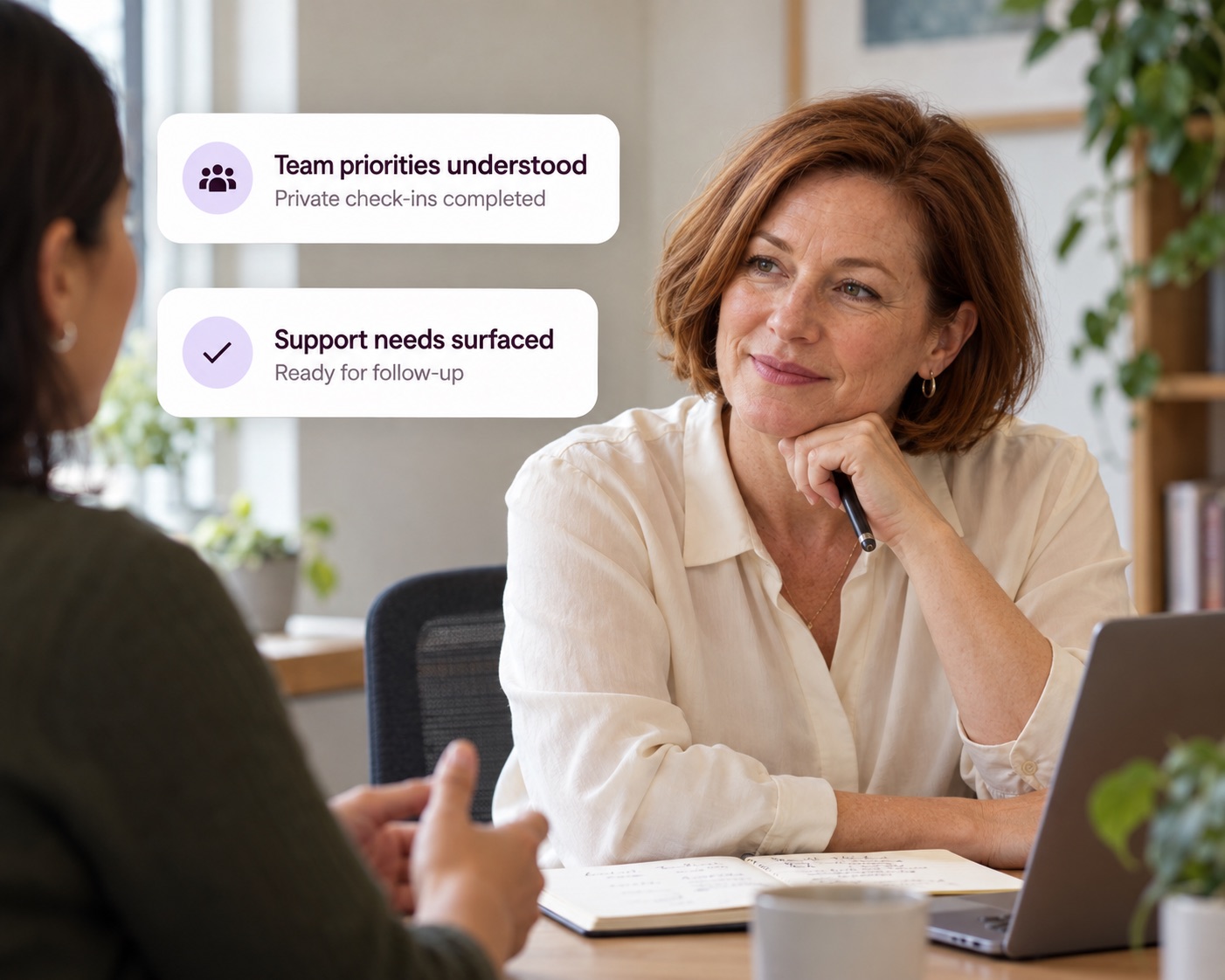
A people leader listening in a one-on-one, with Decided cards showing team priorities understood and support needs surfaced
"Our exit interviews kept saying the same thing. The priority changed three times and nobody made the call. By then the person was gone. Now we hear it in the check-ins, months earlier."
Head of People, Series B, 140 people

Bring the CEO the cause, not the score

Attrition and burnout land on your desk. The cause usually sits in someone else's org: a decision nobody makes, or a blocker a manager can't raise.

Hear why people are frustrated while they're still here

Clara asks every team about the work each week. When a team is worn down, you see what's behind it, months before the exit interview tells you.

Show the exec team the business problem, with an owner

When the morale problem is really a stuck decision, you bring the decision and who owns it. The fix goes to the leader who can make it, not back to the People team.

Check the facts before someone is let go

A manager wants someone out for missing the target. If the target changed three times, letting them go is an expensive mistake and a legal risk. See what changed and what blocked the team before anyone signs.

Hear about the work, not just the mood

Clara has a short voice check-in with your leaders, managers and other key people every week. Before the first one, you and leadership agree on who sees what. Decided puts the answers together and shows you patterns across teams.

Team by team, you see who is working on the plan and who is waiting on something. Patterns across teams, never one person's answers.

How People teams use Decided

A 140-person company cuts regretted attrition in half

Two people had left the growth team, and the survey gave no reason. The check-ins showed why: a roadmap call stuck since the reorg. The Head of People took it to the CEO, who made the call that week. Nobody else left.

New managers at a 200-person company get blockers fixed in days

A new layer of managers was absorbing problems they didn't feel they could raise. Clara asked each of them what was blocked, the owners heard it directly, and the People team coached from the pattern, not from scores.

Another survey won't tell you why they leave

  • ✓Not a survey. A short conversation about the work, every week. Your survey stays if you want it.
  • ✓Not monitoring. People know when the check-in happens, why, and who sees what.
  • ✓No scores. Decided doesn't rate or rank employees or managers.
  • ✓Patterns, not transcripts. Leadership sees what's going on across teams, never what one person said.
  • ✓Calendar only. Check-ins land in Google or Outlook. Nothing for anyone to fill in.
  • ✓People decide about people. Decided shows what's stuck. It never makes a call about anyone's job.

Your next survey is months away

The people deciding whether to stay are deciding now. Next quarter the survey will give you a lower score. It won't tell you which decision they were waiting on, or who could have made it.

What your employees will ask first

Is this employee monitoring?

No. Check-ins are announced, not hidden. Everyone hears who sees what before the first one.

Can leadership read what one person said?

No. Leadership sees patterns across teams, under the rules you agree on before the first check-in.

Will this be used in performance reviews?

Decided doesn't score or rank anyone and doesn't make decisions about people. How the output may be used is part of the rules people hear up front.

Can a manager use this to build a case against someone?

No. Decided doesn't record or score individuals. It shows what each team was asked to do, what changed and what blocked it, so the company checks its own side before it blames a person.

Why would people be honest with Clara?

Nobody can promise that. What you control is whether people know where their words go, and they hear it before the first check-in.

Where do we start?

With one team you can't afford to lose, a group of new managers, or a reorg. One round of check-ins, one brief, then you decide.

Hear it now not at the exit interview

One call to pick the team and agree on who sees what. Then you hear what's wearing people down while you can still fix it.