








A top US nonprofit fintech ships 4x faster with Decided
One Alignment Scan showed the roadmap the team was actually running next to the one in the plan.
Every sprint on the wrong plan is burn you don't get back. Decided checks in with every level weekly and shows you the plan your team actually runs.
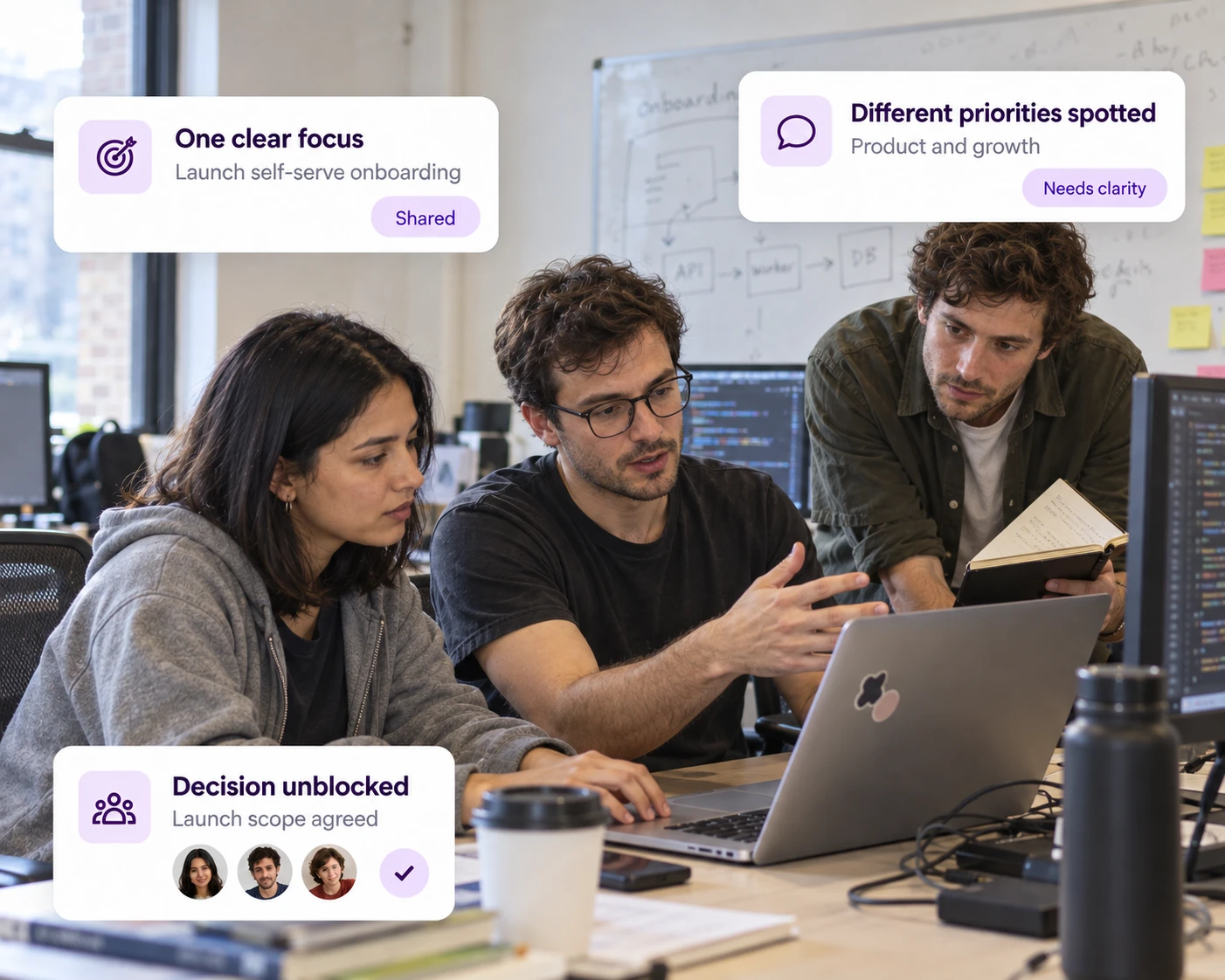
"We thought we needed more headcount. Decided showed us that we had a coordination problem, not a capacity problem." How Decided helps:

"On track" is what you hear every week until the quarter closes. Nobody checks where the team's time actually went.
You used to hear everything first. Now you're not in the room, and the room says "fine." Decided talks to every level every week, so you hear it first again.
Every hire adds burn. Before the next hiring plan, see whether the team you have is running the same plan. If three teams are working from three takes on the same priority, another hire adds burn, not speed.
Every decision waiting on you is a team on hold. Decided keeps cross-team decisions in one list, with owner and days waiting. You take the few only you can make, and the team keeps shipping.
Clara, Decided's AI interviewer, has a short voice check-in with your leaders, managers and other key people every week. She asks the question their status update was written to avoid. Decided cross-checks the answers, so you see where focus actually went.
The alignment map shows, priority by priority, which teams are working from different versions of the plan. It doesn't care who sounded confident in the meeting, only who said what and whether it still matches.
The weekly leadership brief shows what changed, what's blocked, what needs a decision and who should follow up. It lands before the leadership meeting and is ranked by what it costs you to ignore.
At the next check-in Clara asks whether the decision got made and who owns the next step. The follow-up loop keeps it open until someone closes it, not until the meeting ends.
One Alignment Scan showed the roadmap the team was actually running next to the one in the plan.
The CEO was ready to hire for the launch. The first brief showed two teams working from two takes on the same priority and a decision nobody owned. Once that decision had an owner, the hiring plan went on hold.
Investors don't fund the roadmap. They fund the team's ability to ship it. Walk into the next round with a quarter that matched the plan, not a slide explaining why it didn't.
If the founders still know what every team is doing this week, probably. Once you have several managers and teams that depend on each other, usually around 50 people, you're exactly who this is for.
A 15-minute voice check-in per person per week. No forms, no dashboard to maintain. The leadership meeting gets shorter, not longer.
Why the check-in happens, what gets captured, who can see each output, and how it will be used. All of it before the first check-in. Visibility rules are agreed on at rollout, not discovered later.
No. Leadership sees patterns across the team and the context each person needs under the rules agreed on at rollout, not raw conversations.
No. Decided doesn't score or rank anyone and doesn't make employment decisions. It shows where the plan split across teams. People decide what happens next.
One call to pick the question and the participants. The first brief lands the next day.
One call to pick the question and the people. The first brief lands the next day. Then you decide.