




Skip to content

Get out of the day-to-day

You handed off the work, but the questions still come to you. Decided checks in with your team every week and shows you which calls are actually yours.

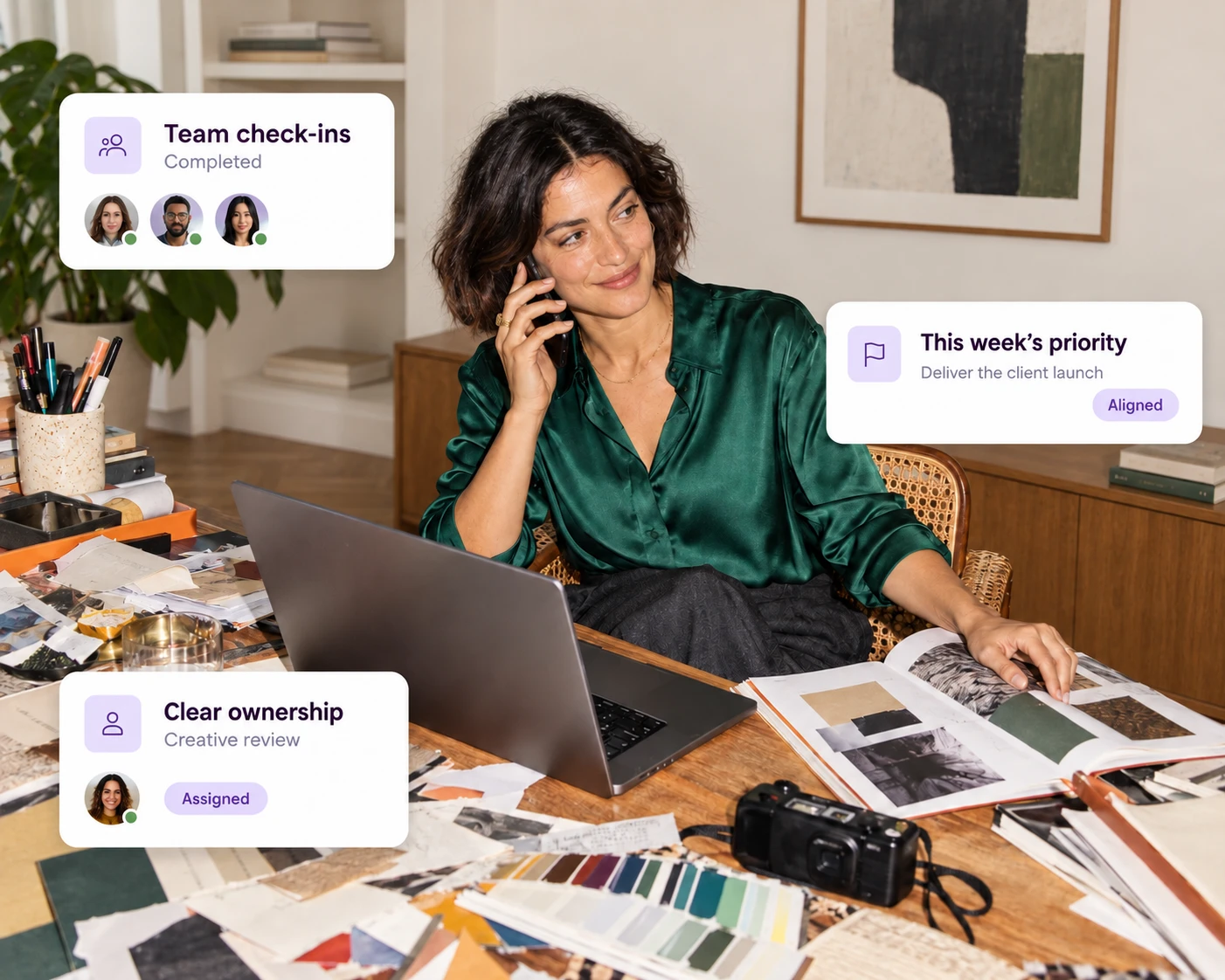
An agency owner on a call at a desk covered in moodboards and color swatches, with Decided cards showing team check-ins completed, this week's priority aligned and clear ownership of the creative review
"We handed off the work, but not the questions. Everyone still came to me, so I was working just as much. Now most of it gets answered without me, and I'm home for dinner."
Owner, services company, 45 people

Know what's happening without being in every conversation

You hired managers to take work off your plate. The work moved. The questions and the follow-up stayed with you.

Hand off decisions, not just tasks

Your managers were promoted for being great at the work, not for managing. Decided shows where each team is stuck and who owns the next call. Most questions get answered without you.

Hear what's true, not just the good version

People tell the owner what's going well. Clara asks each person, one at a time, what's blocked, and Decided compares the answers across teams. You hear about a slipping job before it eats into your margin.

Close what you decided last week

Decisions from the weekly meeting get an owner and a date. At the next check-in Clara asks whether it's done, and the follow-up loop keeps it open until someone closes it. You're no longer the only one who remembers.

Spend your week on the calls only you can make

Decided works alongside the meetings you already run, whether that's EOS, Scaling Up or your own weekly rhythm. Clara has a short weekly voice check-in with you, your managers and other key people. She asks what changed, what's blocked and what needs a decision.

The alignment map puts your priorities for the quarter next to what each team says it's working on. Where two managers heard the same plan differently, you see it before their teams head in two directions.

How owner-led companies use Decided

A 45-person marketing agency cuts client revisions 40%

The account lead, the strategist and the designers each heard the client brief a little differently. Weekly check-ins caught the gap before the first draft, and revision rounds on the biggest accounts fell 40%.

An American B2C company cuts time to market 25% by saying no

Every team had its own top priority. The alignment map showed where they competed, the owner chose, and production on what was left moved 25% faster.

Too early for some, overdue for most

  • ✓Several managers, teams that depend on each other. That's when Decided makes sense.
  • ✓Under 30 people, or one manager? It's too early. Your weekly meeting does the job.
  • ✓Your weekly meeting stays. EOS, Scaling Up or your own rhythm. Decided brings the issues in; it doesn't replace the meeting.
  • ✓Not a performance tool. Decided doesn't score or rank your managers. It shows where the work is stuck.
  • ✓One person at a time. Clara talks to each person alone, under visibility rules agreed on before the first check-in.
  • ✓Calendar only. Check-ins arrive in Google or Outlook Calendar. Nothing to install, nothing for your team to fill in.

Fix it at 40 people, not at 80

Every new manager adds one more person between you and the work. Put the weekly view in place while your management layer is small, and each new manager joins a company that already follows up.

What owners ask before they trust us

Are we too small for this?

Under about 30 people, or with one manager, yes. You still talk to everyone every week, and a weekly meeting does the job. Decided makes sense once you have several managers and teams that depend on each other, usually somewhere between 30 and 100 people.

We already run EOS. Why add this?

Keep it. Your L10 hears what people say in the room. Clara talks to one person at a time between meetings. Decided then puts what's stuck, and what was decided but not done, in the brief you read before the meeting.

Will my managers feel I'm checking up on them?

Visibility rules are agreed on before the first check-in, including what you see. Decided doesn't score or rank anyone. It shows where work is stuck and which decisions are waiting, which is what a good manager wants you to know.

Can I read the transcripts?

No. You see patterns and the open items that need you, not raw conversations, under the rules agreed on at the start.

How do I know it pays for itself?

Start small. One question, one group, for example your managers and the people your biggest client depends on. One round of check-ins, one brief. If it didn't change a call you'd otherwise have made late, stop there.

We don't have anyone to run a rollout. Who sets it up?

You pick the question and the people on one call. Check-ins arrive in Google or Outlook Calendar, and there's nothing for your team to fill in or maintain.

Stop being the answer to every question

One call to pick the question and the people. Then you see what's stuck without every answer passing through you.