






Skip to content

Make the deal math work

Your value creation plan gets rewritten three layers down. With the CEO's agreement, Decided talks to leaders and managers weekly and shows which initiatives stalled and who owns them.

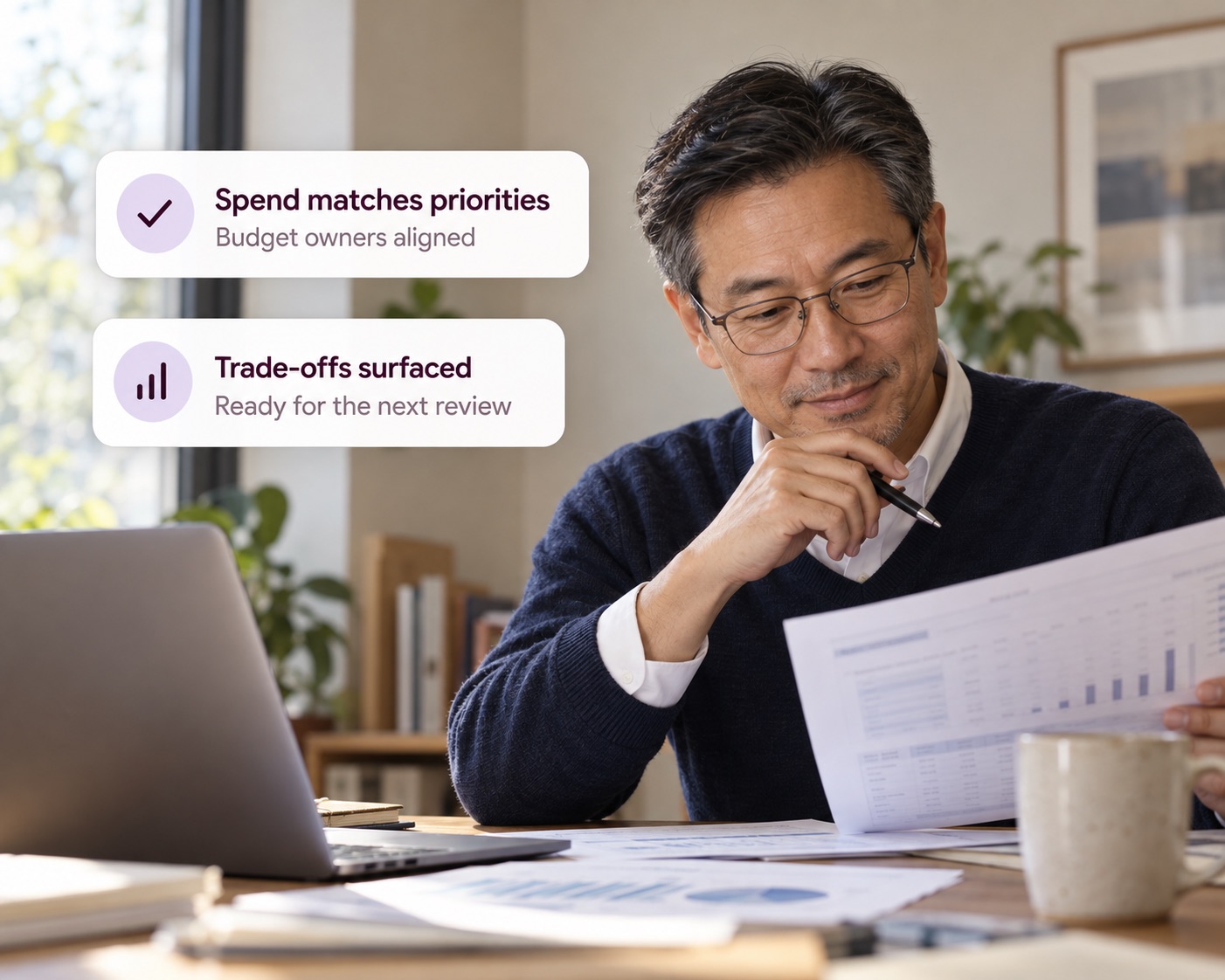
An operating partner reading a report at his desk, with Decided cards showing spend matching priorities and trade-offs surfaced
"Honestly, the plan was never the problem. What happened three layers down was, and we'd find out a quarter later. With Decided I hear about it the week an initiative stalls."
Operating partner, software buyout fund

Know the plan is being run, not just reported

Multiple expansion won't carry most deals now. The return has to come from EBITDA you grow inside the hold, and that growth happens three layers below the board deck.

See which VCP initiatives are moving

Every initiative in the value creation plan has an owner on paper. Each week you see which ones the teams are working on, which stalled, and which decision is holding one up, while the quarter is still open.

Make the management call early

Backing the team or changing it is the biggest call in the hold. Make it in year one, on how each team actually executed against the plan, not on three good board decks.

Get the synergies you paid for

You paid a lower multiple for the add-on because together the companies are worth more. See where the two leadership teams still run two plans, and which integration decisions have no owner.

Put your hours where the EBITDA is

With the CEO's agreement, Clara runs a weekly voice check-in with leaders and managers in each portfolio company. She asks what changed, what's stuck and what needs a decision. Deal and operating partners see what moved, what stalled and who owns it, never transcripts.

The alignment map puts the 100-day plan and the VCP next to the work each team is actually doing. You see where the plan holds and where it has split, in the platform and in each add-on.

How buyout funds use Decided

A buy-and-build fund captures $3M in add-on synergies in year one

A year after the first add-on closed, each company still ran the integration plan its own way. The alignment map showed where the three plans split, and the follow-up loop kept every integration decision open until an owner closed it.

A sponsor-installed CEO hits the first-year EBITDA plan

A CEO installed at close had a 100-day plan the board approved. Check-ins showed sales and product still working on last year's priorities. The CEO reset them before the first board meeting, and the company finished year one on its EBITDA plan.

The buyer prices your LTM, not your VCP

At exit, the buyer pays a multiple of the last twelve months of EBITDA. Every initiative that slipped this year is in that number. Find the slip while there's still hold period left to fix it.

Built for sponsors who want facts before the board deck

  • ✓Nothing for management to fill in. No new template, no second reporting pack.
  • ✓Facts, not scores. Decided doesn't rate the CEO. It shows what moved against the plan and what hasn't.
  • ✓The CEO agrees on the rules first. Management decides with you what the fund sees.
  • ✓Patterns, not transcripts. No one's answers are shown to the fund.
  • ✓Platform and add-ons on one map. Every company in the build, against one plan.
  • ✓Calendar only. Check-ins arrive in Google Calendar or Outlook. Nothing else to install.

What sponsors ask before they bring it to management

Will the CEO see this as the fund looking over their shoulder?

It saves management work: no new template, fewer catch-up calls from the deal team, and board meetings spent on decisions. The CEO reads every brief first and agrees with you on what the fund sees before the first check-in.

Is this a score for the CEO or the management team?

No. Decided doesn't score or rank anyone. It shows what moved against the plan, what stalled and who owns it. You and the board make the call.

We already have KPIs, board decks and portfolio monitoring. Why add this?

Those report the numbers after the fact. Decided talks to the teams and shows the work behind the numbers: which initiatives are moving, what's stuck and which decision is missing, while the quarter is still open.

Can we see individual answers?

No. The fund sees patterns per company and across the portfolio, never what one person said.

Does it work across a platform and its add-ons?

Yes. The platform and every add-on sit on one alignment map, so you see where the companies run one plan and where they still run their own.

Where do we start?

With one company where the plan matters most this year: a new platform in its first 100 days, an add-on integration, or a company getting ready for exit.

Back the right team in year one